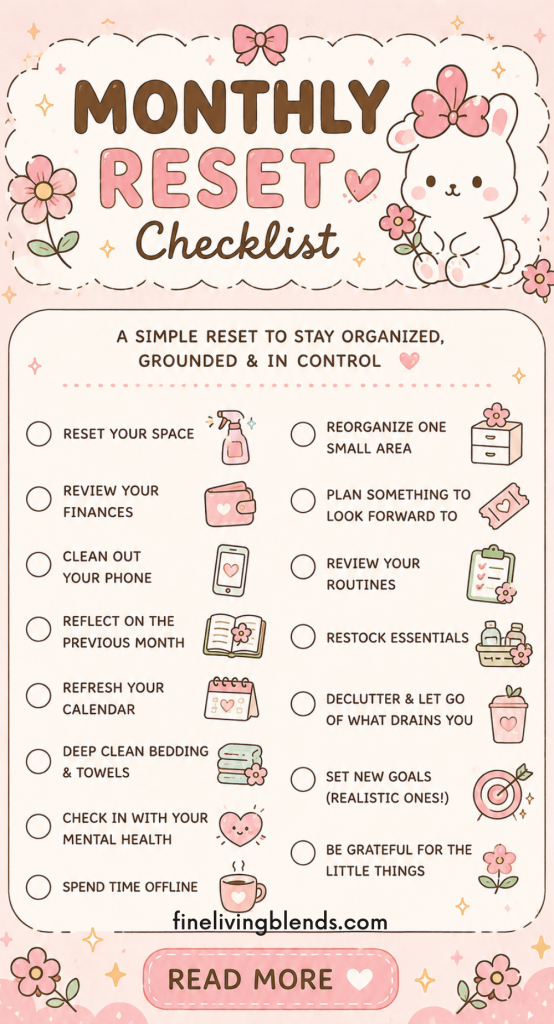
There was a period where every month started mixing into the next without me fully realizing it. I would keep telling myself I needed to “get my life together,” but instead of making smaller changes consistently, I kept waiting for some magical Monday where I would suddenly become perfectly organized, productive, rested, healthy, and emotionally balanced all at once. This is why I love this monthly reset checklist. It helps me stay in check
Meanwhile my actual life usually looked much less put together. Laundry piles would slowly grow in the corner of my room, random receipts would collect inside my bags, my phone would have thirty open tabs, and mentally I always felt like I was trying to catch up with myself.
What finally helped was creating monthly reset checklists instead of relying on random motivation. Having one day every month where I intentionally slowed down, cleaned things up, reorganized my routines, checked in with myself emotionally, and refreshed my environment made life feel much less chaotic overall.
And honestly, monthly resets are less about becoming a completely new person every thirty days and more about giving yourself regular opportunities to pause before stress, clutter, exhaustion, and overwhelm start building too heavily again.
A planner open on my desk, softer lighting while cleaning at night, fresh bedding, and even little things like reorganizing my bathroom shelves make reset days feel calming instead of overwhelming too.
Why Monthly Resets Matter
I think many people only try to reset their life once they already feel completely burned out.
You ignore stress, clutter, routines, sleep habits, finances, unfinished tasks, and mental exhaustion for too long because life gets busy. Then suddenly everything feels overwhelming at the same time and you end up trying to fix your entire life in one exhausting weekend.
Monthly reset routines help prevent that buildup from happening in the first place.
They create smaller moments throughout the year where you can stop, breathe, reorganize things, and reconnect with yourself before life starts feeling emotionally chaotic again. I also noticed monthly resets helped me feel much more grounded because they forced me to actually pay attention to what was helping or hurting my mood instead of moving through life completely on autopilot.
And honestly, calmer lives usually come from smaller repeated habits instead of dramatic overnight transformations anyway.
If you’ve been trying to build slower and more intentional routines lately, these slow living habits fit naturally with monthly resets and calmer everyday routines too: The Ultimate Guide to Slow Living
Monthly Reset Checklist: How to Refresh Your Life Every Month
Reset Your Space
Cleaning my apartment always changes my mood faster than I expect it to.
Once clutter starts building up, my brain feels cluttered too. That’s why one of the first things I do during a monthly reset is clean and reorganize my environment before everything starts feeling mentally overwhelming.
I usually wash bedding, vacuum properly, wipe surfaces down, reorganize random drawers, declutter shelves, clean my bathroom, and put away all the little piles that somehow collect around my room during busy weeks.
Fresh sheets, cleaner counters, softer lighting, and organized spaces genuinely make everyday routines feel calmer afterward. I also noticed I sleep much better once my room feels clean and reset.
Review Your Finances
Avoiding finances usually creates much more stress later, even though it feels easier in the moment.
Once a month I sit down with coffee, open my banking apps, check spending habits, review subscriptions, and look at upcoming expenses so nothing catches me off guard halfway through the month.
I also like writing things down physically because it makes budgeting feel more intentional instead of chaotic. A simple notebook for tracking spending and goals helped me become much more aware of where my money was actually going every month.
Clean Out Your Phone
Digital clutter affects stress levels much more than people realize.
My phone starts feeling mentally overwhelming very quickly when it’s full of screenshots, random downloads, unread emails, notifications, and apps I never even use anymore.
During monthly resets, I delete unnecessary photos, clear tabs, organize apps, unsubscribe from emails, and unfollow accounts that leave me feeling mentally drained instead of inspired.
And honestly, cleaning your digital space makes your brain feel lighter too.
Reflect on the Previous Month
This habit helped me become much more self-aware because I realized I was moving through life very quickly without actually paying attention to how I was feeling.
I usually journal about:
what felt good,
what stressed me out,
habits I want to improve,
what drained my energy,
and what made life feel calmer or happier.
Those reflections help me notice patterns I would normally ignore completely.
I also think monthly reflections stop life from feeling repetitive because they force you to actually acknowledge growth, stress, routines, and changes instead of rushing straight into the next month automatically.
Refresh Your Calendar
I feel significantly less anxious once I know what my month actually looks like.
At the beginning of every month, I check appointments, birthdays, deadlines, plans, events, and important dates so everything feels less mentally scattered.
I also intentionally add enjoyable things into my calendar too instead of only filling it with responsibilities. Coffee dates, movie nights, solo afternoons, slower weekends, or little things to look forward to make a huge difference emotionally.
Reorganize One Small Area
Trying to organize your entire life in one day becomes exhausting very quickly.
Instead, I pick one smaller area every month to properly reset. Sometimes it’s my bathroom drawers, closet shelves, desk, makeup storage, or kitchen cabinets.
Those smaller organization projects feel much more realistic to maintain long term, and they slowly improve your entire environment over time without becoming overwhelming.
Deep Clean Your Bedding and Towels
Fresh bedding genuinely changes the entire feeling of my room.
Washing blankets, pillowcases, towels, mattress covers, and deep cleaning sleeping spaces always makes life feel softer afterward. I also noticed my nighttime routines improved once my room felt cleaner and calmer overall.
A linen spray, warmer bedside lighting, and cleaner sheets somehow make evenings feel much more peaceful too.
Check In With Your Mental Health
This became one of the most important parts of my monthly reset checklist because it forced me to stop ignoring stress until burnout hit completely.
I ask myself questions like:
Am I sleeping enough lately?
What has been draining my energy?
Do my routines still feel realistic?
What habits are helping me?
What habits are making life harder?
Those quieter check-ins help me make adjustments before everything starts feeling emotionally heavy again.
Spend Time Offline
I noticed my monthly resets felt much more grounding once I intentionally included offline time too.
Going for walks, reading, journaling, cleaning slowly, baking, or simply spending an afternoon away from constant notifications helps my brain feel much calmer afterward.
I think many people are mentally exhausted simply because they never fully disconnect from screens anymore.
If you’ve been craving calmer hobbies lately too, these softer hobbies fit naturally with grounded routines and slower living habits: 15 Girly Hobbies To Add More Joy And Softness To Your Life
Refresh Your Morning and Night Routines
Routines naturally stop working sometimes because life changes constantly.
Once a month I check whether my routines still feel realistic or whether they’ve slowly become stressful, rushed, or impossible to maintain consistently.
I also noticed softer nighttime routines changed my stress levels significantly. Less scrolling, calmer lighting, journaling, reading, tea before bed, and quieter evenings improved both my sleep and my mood over time.
Plan Something to Look Forward To
Life starts feeling repetitive very quickly when every month revolves entirely around responsibilities.
That’s why I intentionally plan little things to look forward to. Sometimes it’s a solo café date, movie night, weekend trip, shopping day, brunch with friends, or simply blocking off one slow relaxing weekend with no obligations at all.
Those smaller moments genuinely make everyday life feel lighter.
Let Go of What Feels Mentally Heavy
Monthly resets are not only about organization and productivity.
Sometimes the most important reset is emotional.
That might mean letting go of clutter, habits, routines, relationships, expectations, or environments that constantly leave you feeling drained.
I also noticed life started feeling much calmer once I stopped trying to carry everything emotionally all the time.
If you’ve been trying to create softer more intentional routines lately, this post about romanticizing everyday life fits really naturally with monthly reset habits too: 30 Simple Ways to Romanticize Your Life
Common Mistakes People Make During Monthly Resets
One of the biggest mistakes people make is trying to completely reinvent their entire life every month instead of focusing on smaller realistic improvements. That usually leads to burnout instead of consistency.
I also think many people focus too heavily on looking organized instead of creating routines that actually help them feel calmer emotionally too. Aesthetic planners and perfect schedules do not automatically fix stress if your routines still leave you exhausted constantly.
Another issue is ignoring smaller problems until everything starts feeling overwhelming at once. Smaller monthly resets work much better because they prevent stress and clutter from building too heavily over time.
And honestly, grounded routines usually come from consistency instead of perfection.
What Actually Helped Me
What helped me most was making monthly resets feel calming instead of strict.
Cleaning my apartment, journaling, refreshing routines, spending time offline, checking finances, reorganizing small spaces, and slowing down long enough to check in with myself genuinely made life feel much more manageable overall.
I also stopped expecting myself to suddenly become perfectly organized forever. Once I focused more on creating routines that supported my real life instead of unrealistic perfection, monthly resets became much easier to maintain consistently.
And over time, those smaller reset habits quietly changed how grounded my life felt overall.
Final Thoughts
Monthly reset routines are really about giving yourself regular opportunities to slow down, clear mental and physical clutter, refresh your environment, and reconnect with yourself before life starts feeling overwhelming again.
You do not need perfectly organized routines or dramatic life overhauls to feel refreshed every month either. Most of the time, smaller repeated habits create much more lasting change than extreme motivation ever does.
And honestly, creating quieter moments to reset your life regularly makes everyday routines feel much calmer than constantly waiting until burnout forces you to slow down.